One in five Cherokee County homes is manufactured housing
About one in five homes in Cherokee County is a mobile or manufactured home. U.S. Census Bureau ACS data counts roughly 3,636 mobile and manufactured homes in the county, about 20 percent of all housing units, one of the highest shares in western North Carolina. Murphy, Marble, Tomotla, and Ranger all have established manufactured-home communities; the county's permit office and inspectors know the setup rules, and the main road corridors through the Hiwassee River valley have carried wide loads before.
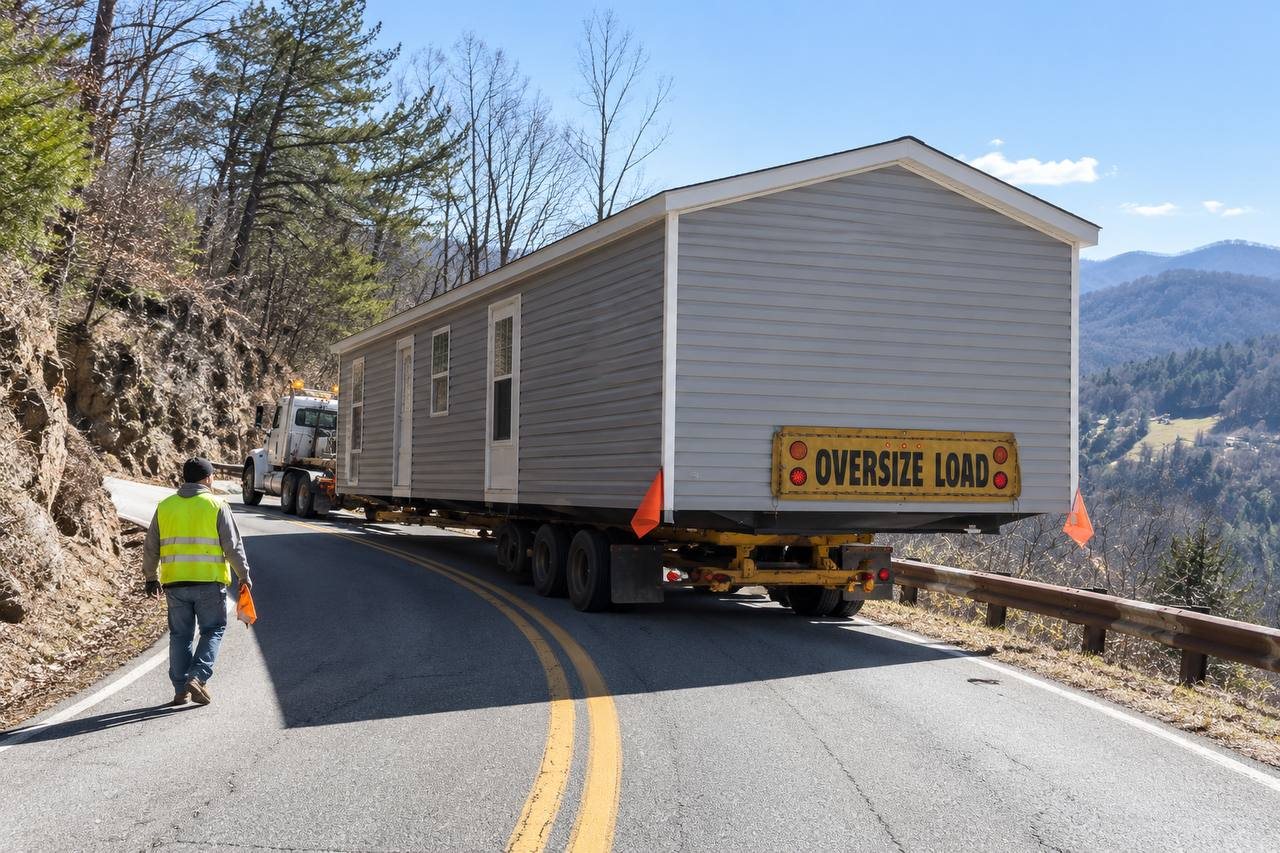
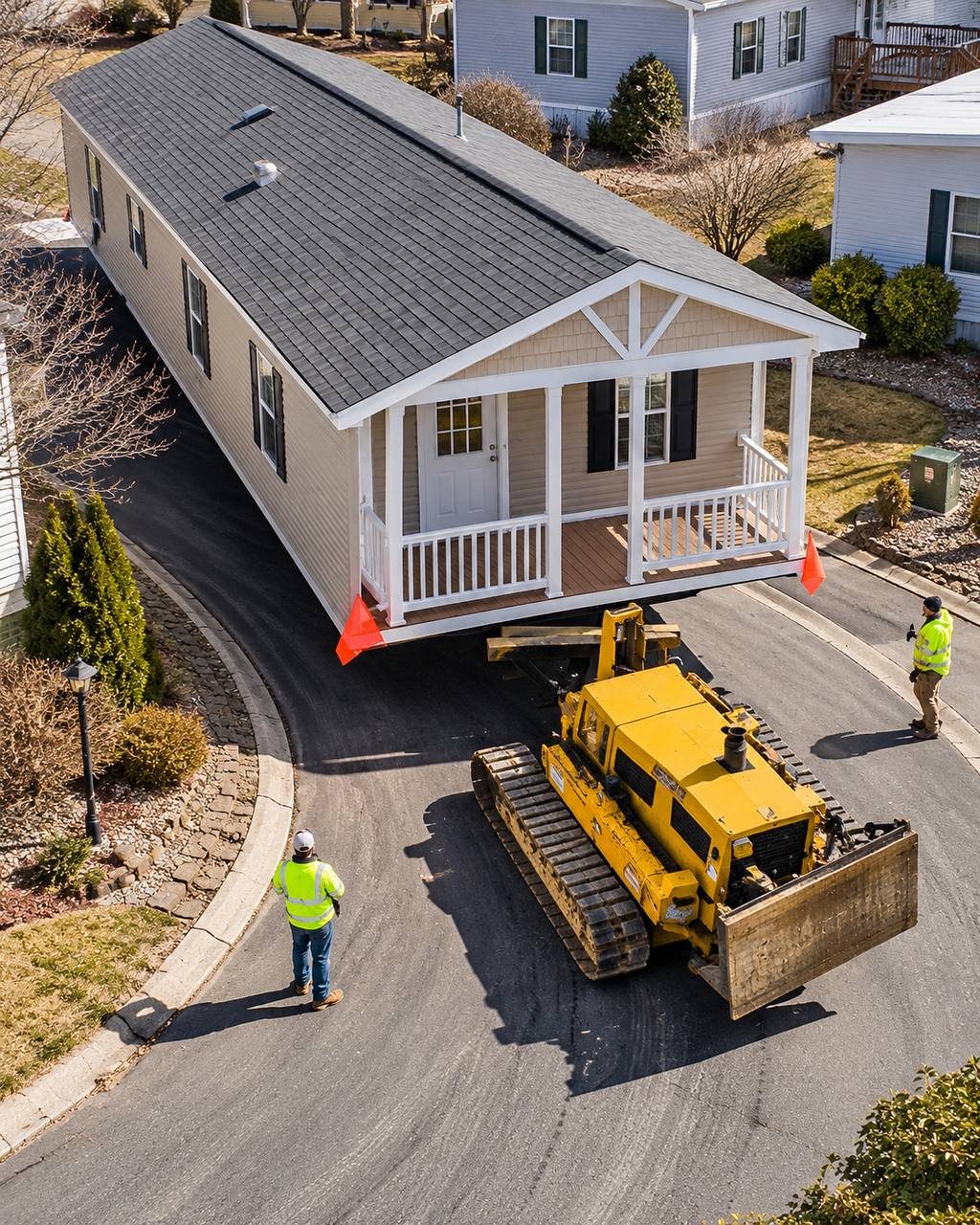
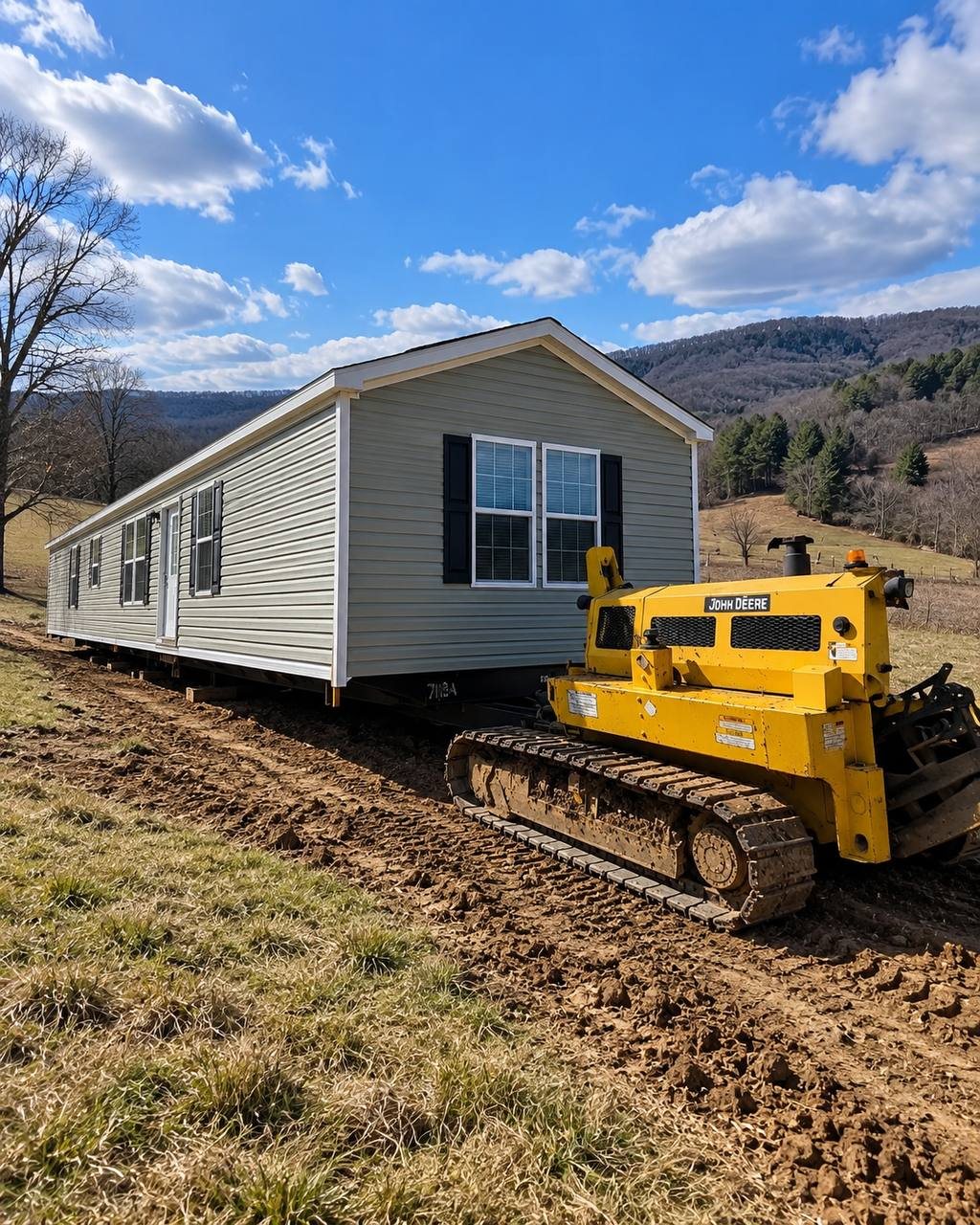
That density also means real demand on experienced movers, particularly in spring and early fall. Whether you are moving a single-wide off a hillside lot inside Murphy proper, relocating a double-wide from a rural Cherokee County tract to a new pad, or bringing a home in from out of state, the same three-permit sequence applies and the same terrain reality holds: this is mountain land, and a 14-foot-wide manufactured home does not fit every secondary road in this county. The move you are planning here is meaningfully different from a flatland move in the Piedmont, and the quote should reflect that.
What a Murphy-area move costs, by scope
Scope and site access drive the price gap more than distance alone. The table below maps job type to the typical range for Cherokee County moves.
| Job type | Typical range | What drives the price |
|---|---|---|
| Single-wide, accessible lot, under 30 mi | $3,000–$5,500 | Pier count, road condition, lot grade |
| Single-wide, difficult access or long-haul | $5,500–$8,000 | Route complexity, slope, NCDOT permit routing |
| Double-wide, accessible lot, under 30 mi | $7,000–$10,500 | Split-and-rejoin labor, pier count, lot prep |
| Double-wide, difficult access or long-haul | $10,500–$15,000 | Escort requirements, route checks, site grading |
A single-wide moving five miles on a paved road to a prepped, level pad is a half-day job. That same home coming off a Hiwassee River-area holler down a narrow county road — gravel approach, sloped lot, steel-pier setup required — is a two-day job with a different invoice. Quotes that omit the NCDOT transport permit fee or the county setup inspection fee are not cheaper; they are incomplete. For a line-item breakdown of what each phase of a move costs, the mobile home transport guide walks through the full scope.
The three permits a North Carolina move requires
Moving a manufactured home in North Carolina runs through three separate paper trails. Getting them in order prevents the kind of delay that grounds a truck mid-move.
NCDOT transport permit. Every manufactured home moved on a North Carolina road is classified as an oversize load. NCDOT Publication MH-2 governs the dimensional limits, routing requirements, and escort rules that apply. Your mover pulls this permit; confirm it is included in the quote, not added later as a line item.
Tax-paid moving permit. North Carolina General Statute Chapter 105, Article 18 requires a tax-clearance permit from the county tax office before a manufactured home can legally be transported. Cherokee County's tax administration issues this after verifying no outstanding property tax balance on the home. Request it early — the permit is low-cost, but the processing window can delay a scheduled move if you wait until the week before.
County setup permit and inspection. Once the home is placed, Cherokee County requires a setup permit covering foundation work, pier installation, tie-down anchoring, and utility connections. The county inspector signs off when installation meets state standards. Utilities cannot be connected until the inspection clears — this is the step most first-time buyers underestimate on timeline.
Terrain, secondary roads, and getting the quote right
Murphy sits at the confluence of the Hiwassee and Valley Rivers, inside a topography that routes traffic around ridgelines rather than over them. U.S. 64 and U.S. 74 carry through-traffic reliably, but a large share of Cherokee County's manufactured homes sit at the end of secondary roads: state-maintained secondary routes, private drives, and easement roads that were never surveyed for a 14-foot-wide load.
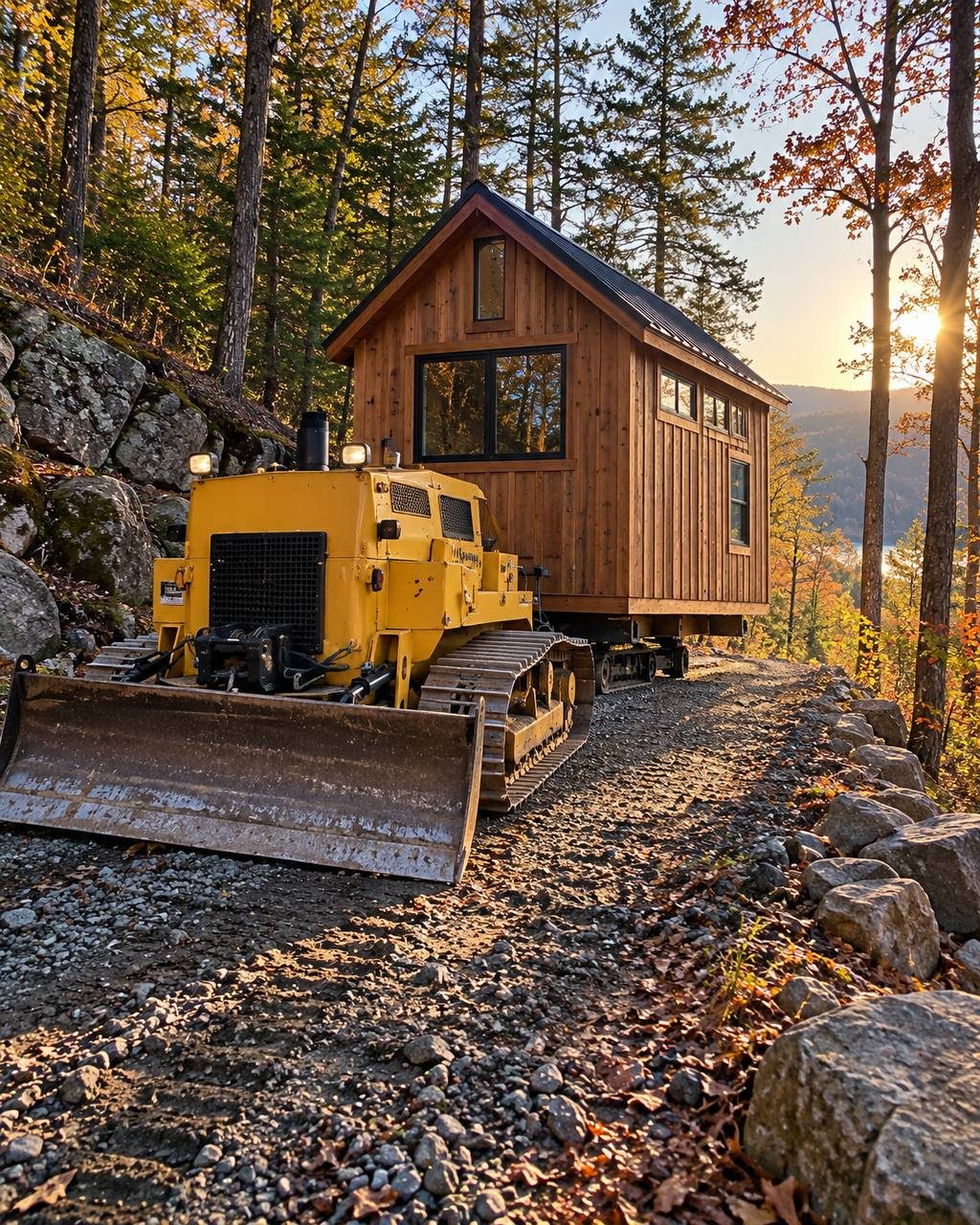
A crew with local experience route-checks before quoting. That means looking at bridge clearances, sharp turns, overhead utility lines, and any road segment that may need county right-of-way approval before the truck rolls. On a double-wide move, each section travels separately, so both route segments need clearance. When the destination lot sits on a steep grade, site preparation — a graded and compacted approach — may need to happen before the transport arrives, or the job stalls on arrival day.
If you are not sure whether your lot is accessible, ask for a site visit before a quote is given. A mover who quotes blind on a Cherokee County mountain lot is estimating, not pricing. The mobile home movers near me resource lists what to ask on that first call to separate crews who know this terrain from those who do not.
Wind zone, storm history, and what the county inspector checks
Cherokee County is classified in HUD Wind Zone I under 24 CFR 3280.305, the baseline manufactured-home wind-resistance standard. Zone I defines minimum anchor spacing, pier requirements, and tie-down specifications; it is the floor the county inspector checks on every installation. 14 federal disaster declarations span Cherokee County's record from 1974-2026, a period that includes two separate hurricane-family events (2020, 2022), a severe storm (2020), a tropical storm (2024), and a winter storm (2026). Zone I compliance is not a formality in a county with that history.
A properly anchored Cherokee County installation includes approved piers at the required spacing, ground anchors or frame ties matched to the soil type, and all utility connections completed by licensed trades before the inspector arrives. Pre-1980 manufactured homes introduce an additional layer: homes built before HUD's 1976 federal standards, and those from the late 1970s, may contain asbestos-containing materials or lead-based paint. EPA regulations govern how those materials must be handled if they are disturbed during transport or setup. Flag the home's build year when requesting quotes — it affects how a mover scopes the job and what protective steps apply. For a full walkthrough of the setup process, the mobile home setup guide covers foundation types, utility sequencing, and what the inspection covers.