Henderson County's manufactured-home footprint
Henderson County runs from the valley floor near Hendersonville north toward the edge of the Asheville metro, and about one in seven housing units across the county is a manufactured or mobile home. Census ACS 2019-2023 counts roughly 8,446 of them — 14.7 percent of the county's total housing stock. Fletcher's share is proportionally smaller: around 259 homes, or 6.9 percent of its units. Those homes sit off US-25, along county roads east toward Crab Creek, and in the rural parcels that grew up before Fletcher incorporated. They age, change hands, and occasionally move — to a new lot in the county, to another county, or out of state.
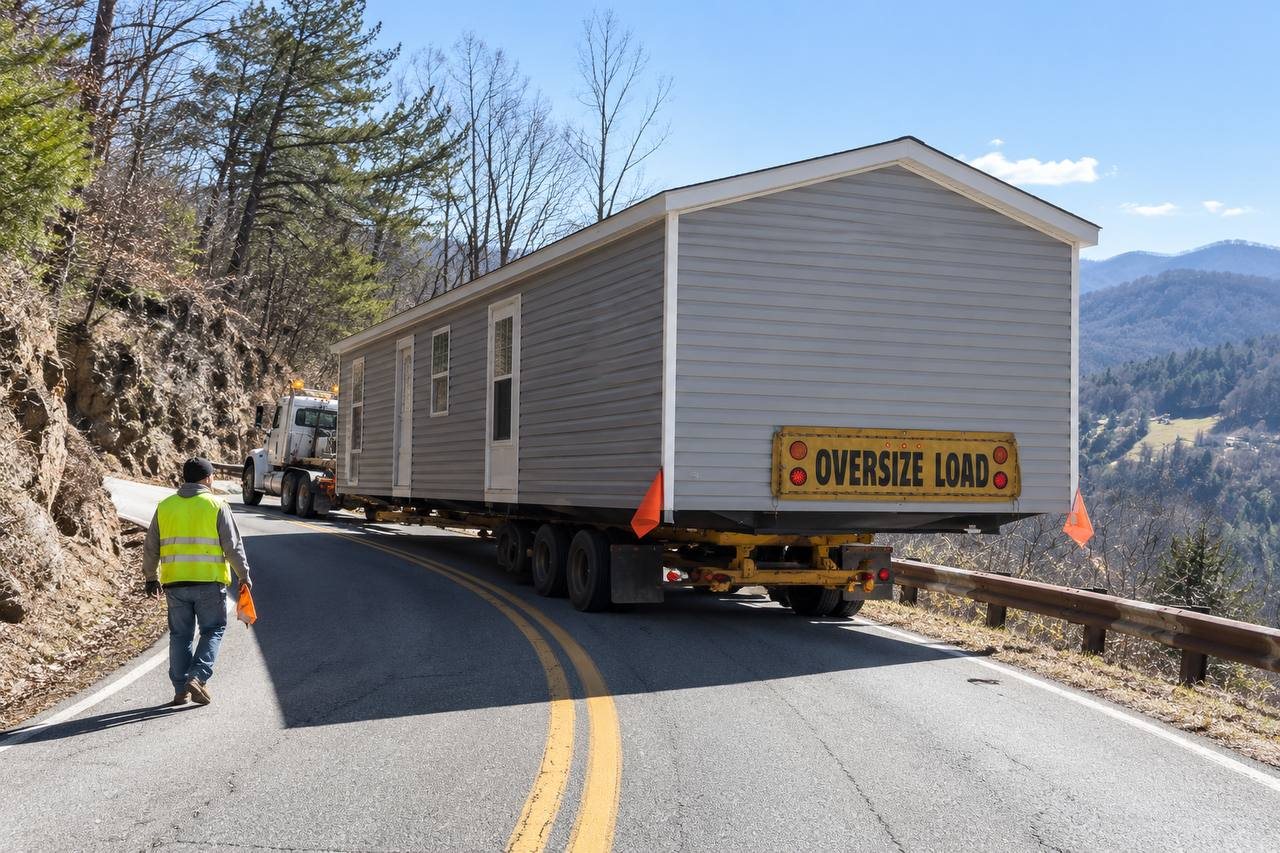
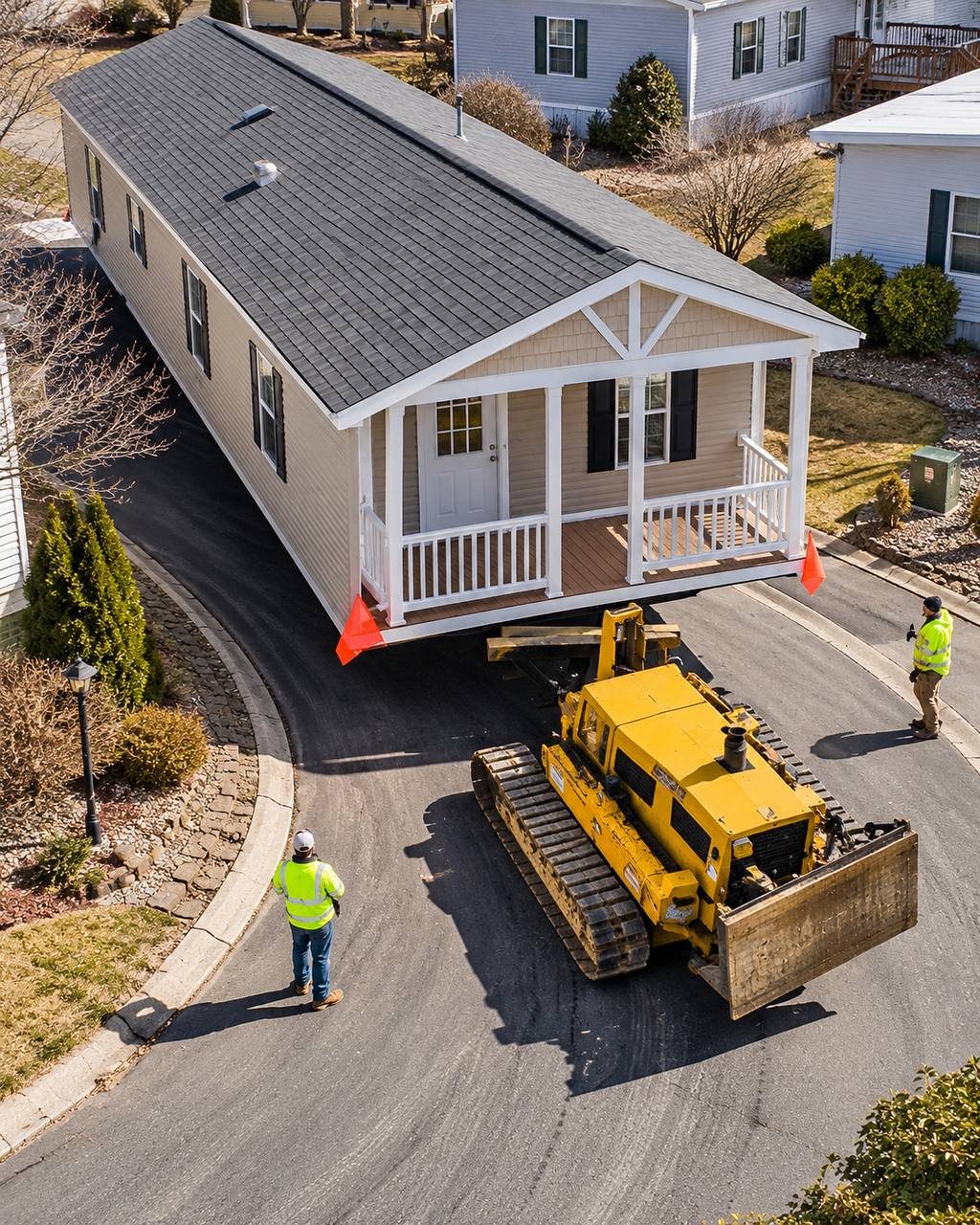
A local move here is usually a half-day to a full day of transport work, but the planning that precedes the truck rolling is where jobs get expensive or complicated. Permit timing, road access at the destination lot, and whether the home needs a complete re-setup or just a basic placement are the three questions worth settling early. For crew options across the region, the mobile home movers near me page covers the broader Henderson County market.
What a move costs around Fletcher
Cost on a local Fletcher move breaks into two buckets: transport and setup. Transport covers disconnecting utilities, pulling the home off its existing supports, hauling it, and placing it on the new lot. Setup covers re-leveling, new piers or footings, tie-down straps, and utility reconnection. The two are sometimes quoted together and sometimes separately — understanding which is which matters when comparing bids.
| Move scope | Typical price range | Key variables |
|---|---|---|
| Single-wide, local haul | $3,000–$5,500 | Distance, road access, disconnection |
| Single-wide, full setup included | $5,000–$8,000 | Pier work, tie-downs, skirting |
| Double-wide, local haul | $7,000–$10,500 | Split haul, two NCDOT permits required |
| Double-wide, full setup included | $9,500–$15,000 | Re-mating, foundation work, tie-downs |
| Difficult-access lot | Toward top of range | Steep slope, tight turn, narrow road |
Jobs toward the high end of each range typically share a profile: a split double-wide haul, a destination lot with limited turning radius, or a home that needs new footings and a full re-setup rather than basic placement. For a closer look at what drives transport costs, the mobile home transport guide breaks down per-mile and per-load components.
The permit stack before the truck rolls
A Henderson County mobile home move touches three permit requirements in sequence — skipping or reordering them creates problems that cost more to resolve than the permits themselves.
The transport permit comes first. Any manufactured or mobile home moved on North Carolina roads requires an oversize/overweight permit from NCDOT. The specifics for manufactured and modular homes are published in Publication MH-2, which covers route approval, permit fees, and required documentation for each load. A double-wide haul requires two permits — one per section — and NCDOT reviews the proposed route before issuing either.
The tax-paid moving permit is the second step. Under NCGS Chapter 105, Article 18, a manufactured home cannot legally leave its lot until property taxes are current and the county tax office has issued a moving permit. The fee is modest; skipping it attaches a lien that follows the home to its new address.
The setup inspection closes the sequence. Once the home is placed, a county inspection covers piers, tie-down anchors, utility connections, and skirting. The installer must hold a license from the NC Manufactured Housing Board (administered through NCDOI); unlicensed setup work fails inspection, and a failed inspection means the home cannot legally be occupied. The NC mobile home moving laws page lays out the full permit timeline and what each step requires.
Valley floor to hillside: Fletcher roads and lot access
Fletcher occupies the valley corridor between Hendersonville and the Asheville airport area, which gives it one practical advantage for manufactured home transport: the valley floor is relatively flat, and US-25 and the I-26 corridor handle oversize loads without the clearance and grade issues that come with the mountain routes to the west and north. A move that stays on or near the US-25 corridor is generally straightforward.
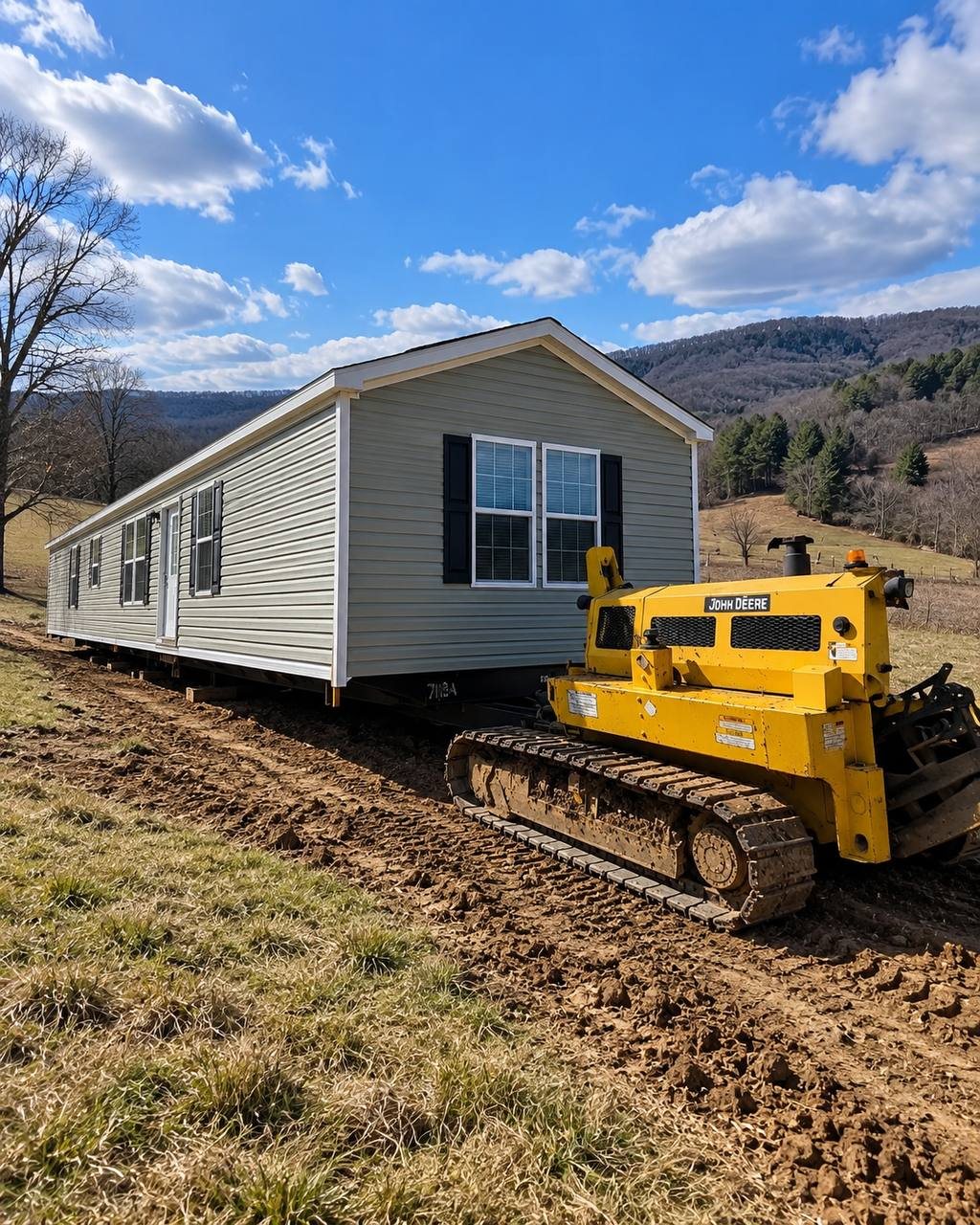
The complications come at the ends of the route, not the middle. County roads east of Fletcher toward the Crab Creek area and west toward the Edneyville community can be narrower, and some rural bridges in Henderson County carry posted weight limits that constrain what can cross. A transporter who does not pre-drive the destination access road may find the last quarter mile considerably harder than the preceding twenty. Lot access is its own variable: a home that must make a tight turn off pavement onto a gravel drive often needs additional equipment or a revised delivery approach.
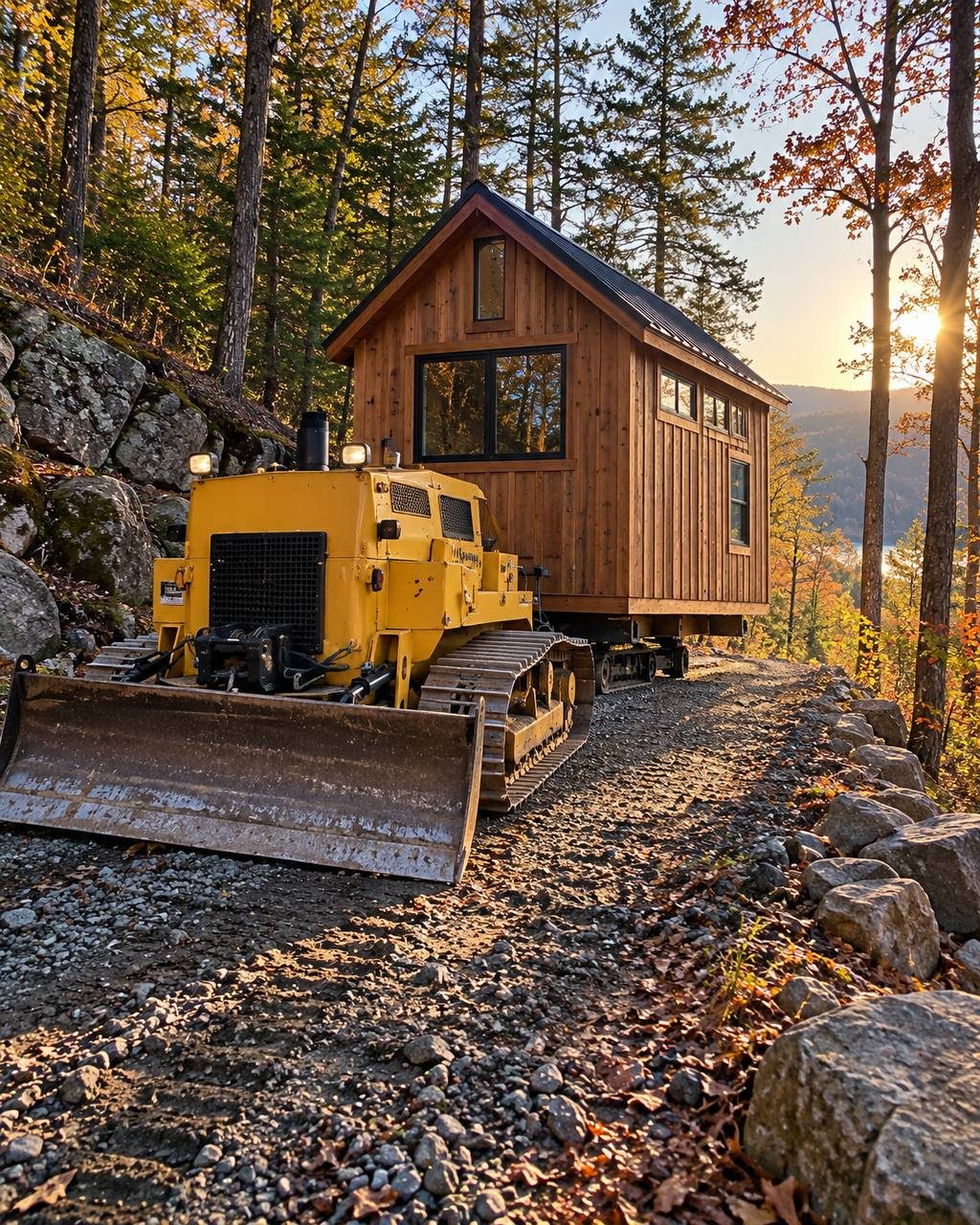
Destination lots on hillsides above the valley floor carry higher setup costs: more blocking and leveling work, and possibly a concrete runner or engineered pier system rather than standard concrete block. Ask any mover whether they have done setups on sloped Henderson County lots and what the last comparable job cost.
Anchoring, storm history, and Henderson County's wind zone
Henderson County is classified HUD Wind Zone I under 24 CFR 3280.305 — the federal baseline for manufactured home construction and installation standards. Homes built to the HUD Code are designed and tested for this wind environment, and the tie-down system required at setup must match that designation. A properly anchored home is not just code-compliant; it is materially better prepared for the wind events this county sees on a recurring basis.
The event record is real. Henderson County has 16 federally declared disasters on record across 1978-2026, including Hurricanes in 2019, 2020, and 2023, a Tropical Storm in 2024, and a Winter Storm in 2026. Tropical-system remnants that push inland across the Blue Ridge bring the sustained wind-and-moisture combination that tests tie-down systems more than any isolated high-wind event. The HUD Office of Manufactured Housing Programs sets the federal installation baseline; county inspectors apply it at the post-placement setup inspection.
Homes manufactured before 1976, when the HUD Code took effect, carry no federal construction standard and require a structural assessment before any move is scheduled. Some pre-HUD homes transport without incident; others do not. If a pre-1976 home has original insulation or flooring materials that may predate current environmental regulations, EPA guidance on asbestos and lead paint in older manufactured housing applies — disturbance during transport can expose materials that were safely contained before the truck arrived.