What Greenville County moves actually cost
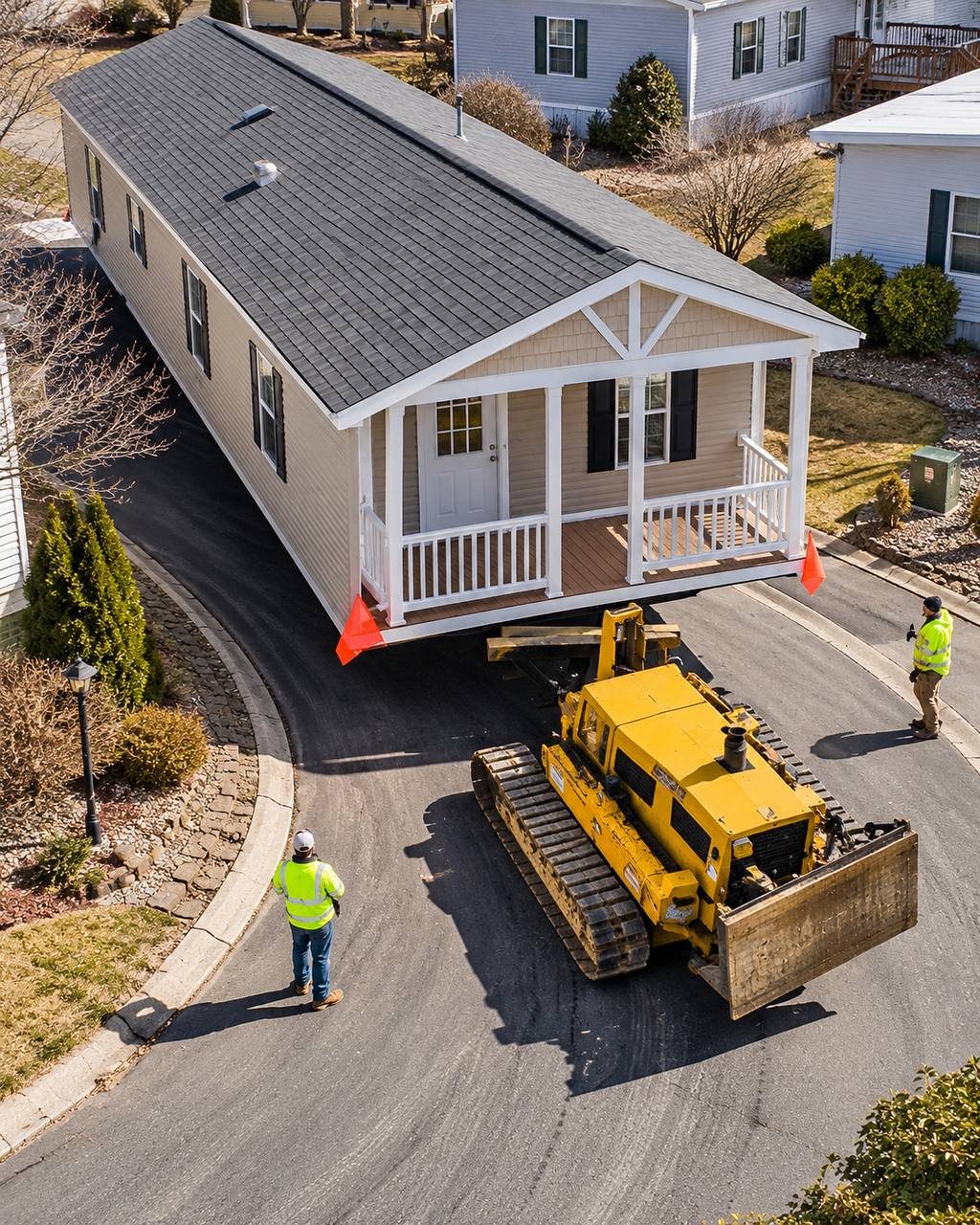
Greenville County holds roughly 17,530 mobile homes, one of the largest manufactured-housing concentrations in the Carolinas according to Census ACS 2019–2023 table B25024. Crews haul units through this county regularly — park-to-park across the suburban corridor from Mauldin to Simpsonville, and rural lot moves up toward Travelers Rest or Greer — and that active market keeps pricing competitive while the variables that set it remain genuinely local.
| Scope | Greenville range | What drives it |
|---|---|---|
| Single-wide, transport only | $3,000 – $8,000 | distance, route complexity, SC oversize permit, escort count |
| Single-wide, transport + setup | $5,000 – $12,000 | above plus blocking, leveling, tie-downs, utility rough-in, inspection |
| Double-wide, transport only | $7,000 – $15,000 | two-section haul or wide-load permit, more escorts, longer permit window |
| Older or non-standard unit | toward top of each band | axle and tire condition, dolly swap, title clearance, pre-HUD considerations |
These are honest working ranges, not quotes. A mover handing you a firm number before visiting both lots and scouting the route is pricing on assumptions. The crews worth hiring walk the job first before putting a number on paper.
Variables that push a Greenville quote higher or lower
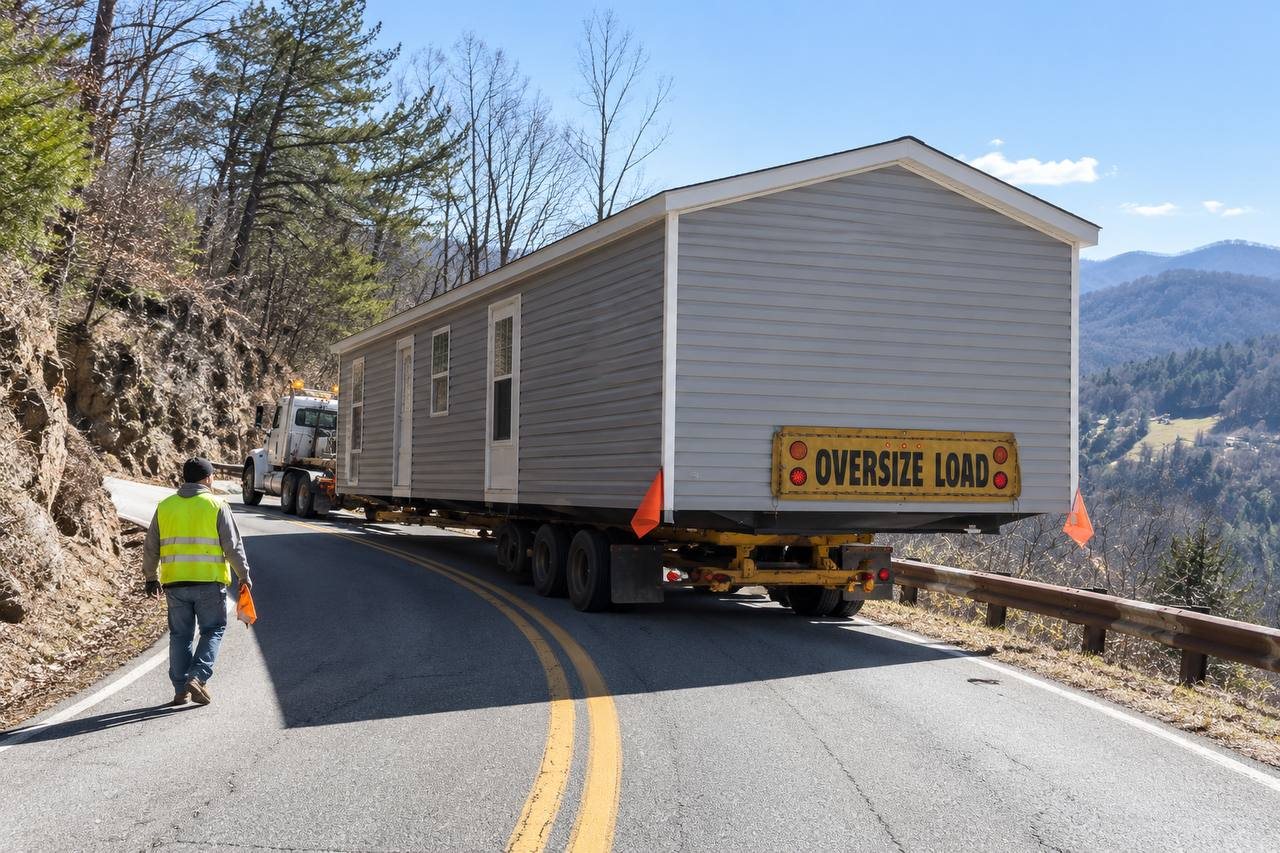
The Piedmont terrain around Greenville is flat to gently rolling, which makes the county more forgiving for hauls than mountain or coastal regions. Even so, route complexity varies more than mileage suggests. A pull from a park off Pleasantburg Drive to a new site near Simpsonville on clear four-lane roads prices differently than a haul from a rural tract off a tight county road near Fountain Inn, even at comparable distances. Transporters scout low-clearance bridges, overhead utilities, soft shoulders, and railroad crossings before committing to a number.
Three variables account for most of the spread inside each range:
- Distance and route class. A longer haul on open state roads can cost less than a shorter move through narrow county roads with tight turns. Ask the transporter to walk through the scouted route before you compare bids, not after.
- Escort requirements. South Carolina requires lead-and-chase escorts for homes exceeding certain width thresholds, and a double-wide moving in two sections commonly needs at least two escorts. Escort fees are legitimate line items but vary by transporter and route — itemize them separately from the haul price to make comparisons meaningful.
- Lot access at both ends. A site that has never had a home placed on it, a tight entrance off a county road, low-hanging tree canopy at the origin park, or soft ground from recent rain each add equipment time and cost. Walk both lots with the crew before signing anything.
Axle and tire condition on the unit itself is a fourth variable that catches owners off guard. A home sitting on worn axles or flat tires may need a dolly swap before it can legally travel — a cost separate from the haul price. Get the unit inspected before collecting quotes if it has been parked for several years. Title clarity matters too: if the title lists a deceased owner, carries a lien, or was never properly transferred, Greenville County will not issue a moving permit until the title problem is resolved. Our Greenville mobile home movers guide covers what to ask a crew before signing, including how to read a route-scout report.
Permits and paperwork this move requires
A mobile home relocation in South Carolina involves several authorization layers. Missing any one delays the move, generates fines, or blocks the county setup inspection at the destination.
- SC oversize-load transport permit. Any home wider than 14 feet requires a South Carolina Department of Transportation permit for highway travel. Most single-wides and all double-wides qualify. The permit specifies the approved route, daylight-only travel windows, and escort requirements. Your transporter obtains this — ask for a copy before the truck moves.
- Greenville County moving permit. Before relocation, the county requires a moving permit and confirmation that property taxes on the unit are current. A tax clearance verifies no lien blocks the move. Build at least a week of permit lead time into your schedule before setting a transport date, and resolve any title issues before starting that clock.
- Setup permit at the destination. Once the home arrives, a building permit for the installation is required. Setup must conform to HUD manufactured housing installation standards, including an anchoring system certified for this county's wind zone, proper pier blocking, and a final county inspection before occupancy.
South Carolina's manufactured home installation program references the International Code Council's model installation standard (ANSI/ICC A225.1), and county inspectors apply it at final. A setup contractor who is not current on those requirements is a scheduling risk: a failed inspection adds a re-inspection fee and delays the date the home can be lived in.
Anchoring, Wind Zone I, and why the setup line in your quote matters
Greenville County is classified as HUD Wind Zone I (24 CFR 3280.305), the baseline classification under the federal HUD Code. Any manufactured home installed here must use an anchoring and tie-down system certified for Zone I wind loads. That requirement covers new placements and homes reset after a move. A setup that shortcuts the anchoring schedule fails the county inspection, full stop.
The wind-zone requirement is not academic here. Greenville County has recorded 23 federally declared disaster events over 2003-2026, including hurricanes in 2024 and 2023, a tropical storm in 2024, a wildfire in 2025, and a winter storm in 2026. Mobile homes account for a disproportionate share of storm damage in manufactured-housing-dense counties, and the anchoring system is the primary structural defense. The anchoring cost is also the part of the setup bill most owners underestimate: it varies with site soil, home size, and the number of anchors the installation standard requires — all of which a county inspector will check. Get anchoring itemized separately in every setup bid so you can compare it directly.
For a detailed breakdown of what the full setup phase includes and how it is priced, see our mobile home setup guide.
Pre-1976 homes and what age adds to the cost
Mobile homes built before June 15, 1976 predate the federal HUD Code entirely. Greenville County's large and aging housing stock means pre-HUD units are not rare here, and they carry two cost complications that newer homes do not.
First, a pre-1976 home may not meet current Zone I anchoring requirements without modification. A setup engineer may call for additional piers, specific tie-down configurations, or structural reinforcement that falls outside a standard setup quote. Have this assessed before committing to a move cost, not after the home has arrived at the new site.
Second, homes of that vintage may contain asbestos in floor tiles, ceiling tiles, duct tape, and insulation, or lead-based paint on walls and trim. Under EPA regulations, those materials must be handled according to federal abatement rules if disturbed during a move or setup. Not every transporter is trained or equipped for pre-HUD units. Ask explicitly whether the crew has handled them before and what their procedure is if asbestos-containing material is encountered during disassembly or installation.
For a broader look at how vintage, size, and distance interact across South Carolina and the wider Southeast, the full mobile home moving cost guide covers the regional picture.