A valley full of mobile homes, and a road network that earns it
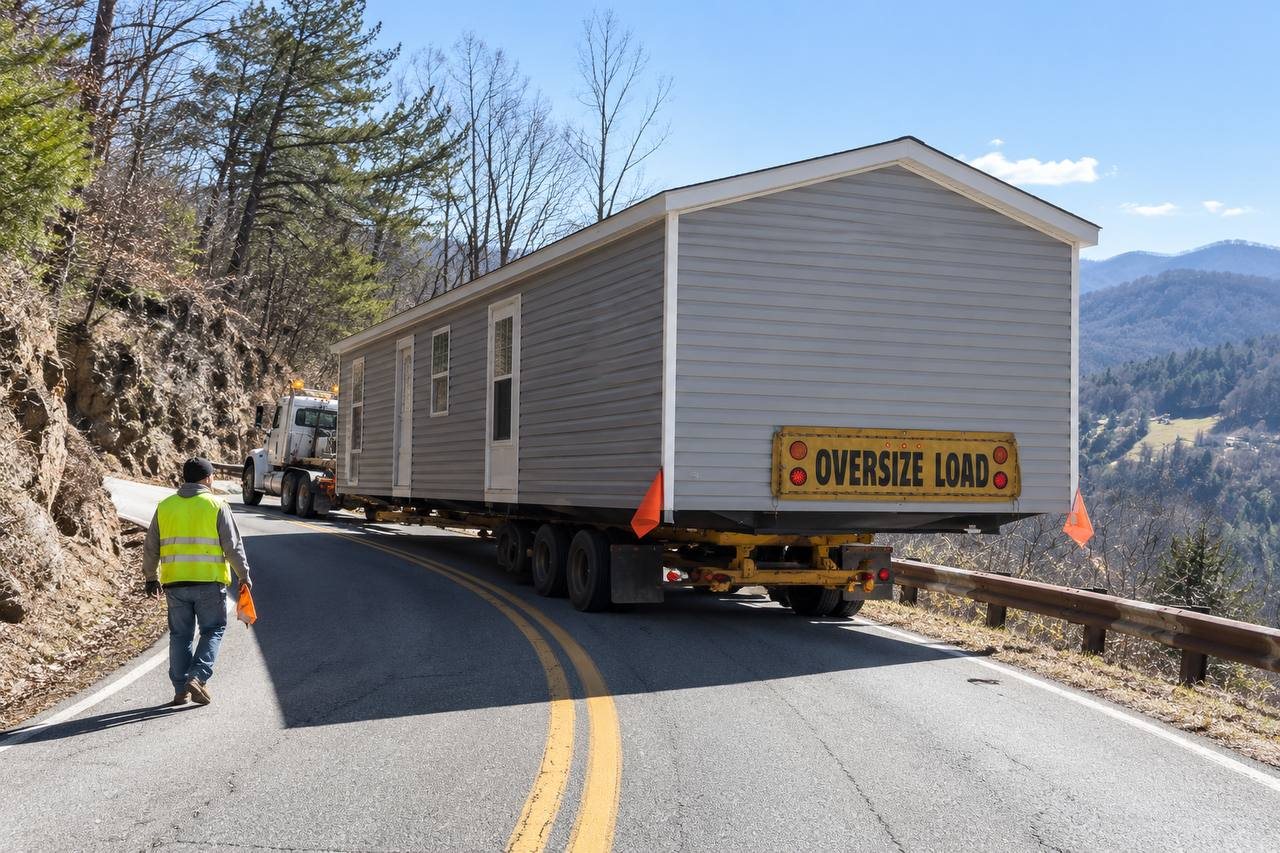
Swannanoa's narrow river corridor between Black Mountain and east Asheville holds roughly 353 mobile homes by Census ACS estimates — about 14.6 percent of the town's housing stock, a higher share than the already-notable 12.1 percent across Buncombe County. The county as a whole counts around 16,047 manufactured homes, one of the larger concentrations in western North Carolina. Those numbers mean this is a well-traveled trade on familiar roads, but the geography still asks questions that flat-county moves never face: US 70 handles a permitted wide load well enough, but the side roads off Bee Tree Road or up into the ridge lots above the valley floor are another matter entirely.
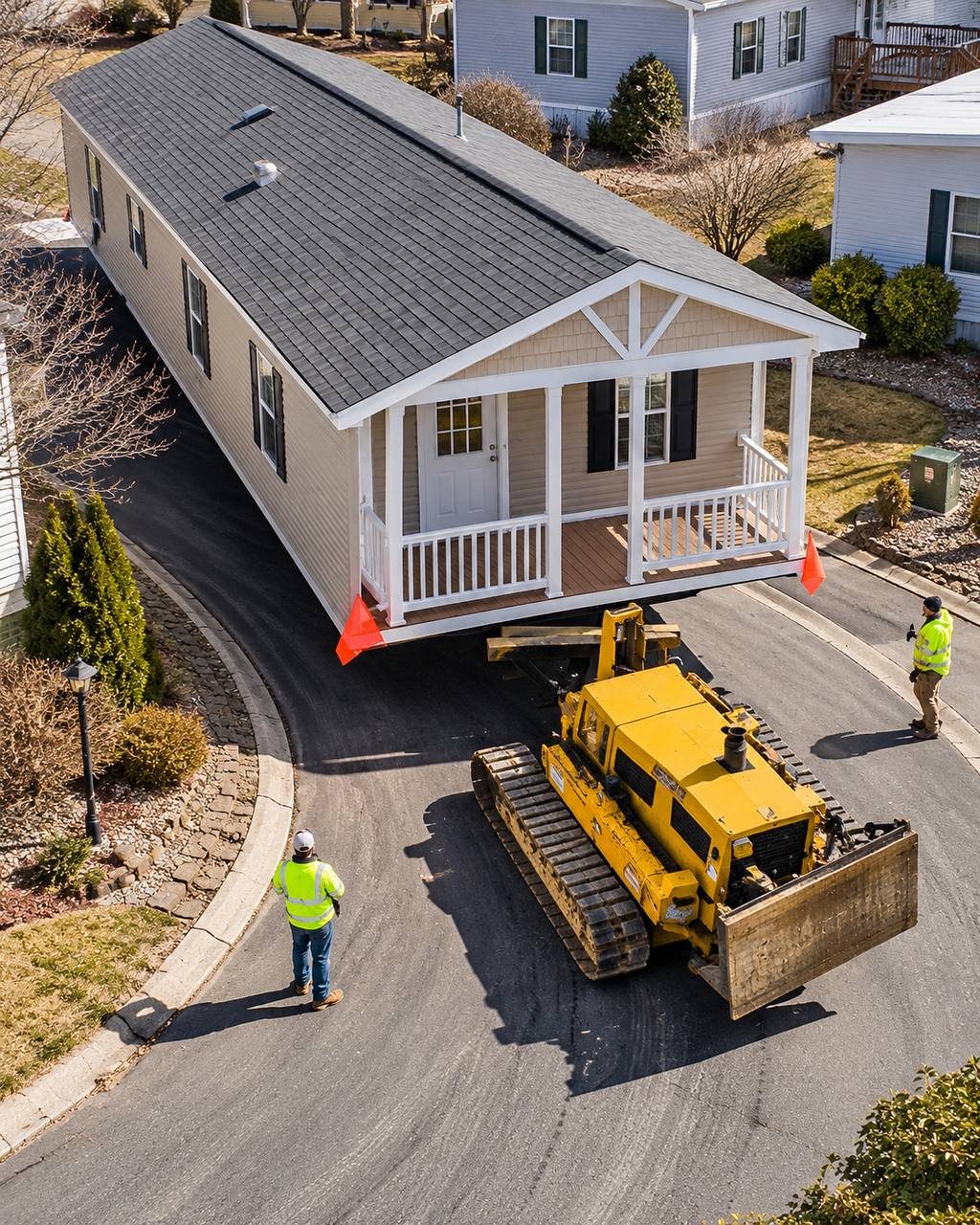
A move into, out of, or within Swannanoa starts with that corridor reality. The transport itself is governed by NCDOT permit requirements; the new-lot setup is governed by HUD and county inspection rules; and the final cost lands in a range that terrain, mileage, and section count all influence. The transport overview covers the mechanics of wide-load moves; what follows covers what each stage actually costs and what the paperwork looks like on both ends.
What a move actually costs in this market
Around Swannanoa, a single-wide move typically runs $3,000 to $8,000 and a double-wide $7,000 to $15,000. Those ranges cover a local or county move; longer hauls push toward the upper end. What moves a job through that range: section count, total mileage, road access at the destination lot, and whether setup is bundled or billed as a separate line item.
| Move scope | Typical range | Main cost drivers |
|---|---|---|
| Single-wide, local (under 25 miles) | $3,000–$5,500 | Disconnects, permit, blocking |
| Single-wide, longer or difficult access | $5,500–$8,000 | Mileage, additional NCDOT permits |
| Double-wide, local | $7,000–$10,500 | Section separation, two moves, re-marriage |
| Double-wide, longer or ridge-lot access | $10,500–$15,000 | Road access, blocking, full setup |
Get a written quote that separates transport from setup — combining those line items makes it harder to see where estimates drift. Verify current state permit fees directly with NCDOT before finalizing any budget. A local mover search can help identify crews familiar with the Swannanoa Valley road network.
Permits and legal steps the state requires
Two state requirements apply to every move in North Carolina, and both must be satisfied before the home rolls. First, NCDOT issues the oversize transport permit — a mobile home is a wide load by legal definition, and the permit governs the approved route, travel hours, and escort vehicle requirements. The document that explains all of it is NCDOT Publication MH-2, which is worth reading before booking any contractor. Second, North Carolina statute under NCGS Chapter 105, Article 18 requires a tax-paid moving permit before a home leaves its current lot — the county tax office issues this, and skipping it creates a title encumbrance that follows the home to its new location.
On the contractor side, movers and installers in North Carolina must hold current licensing administered through the NC Department of Insurance, which oversees the NC Manufactured Housing Board. Ask any contractor for proof of current licensing before signing a contract. The complete picture of permit steps and state rules is at our NC moving laws page.
Setting it down: wind zone, anchoring, and the county inspection
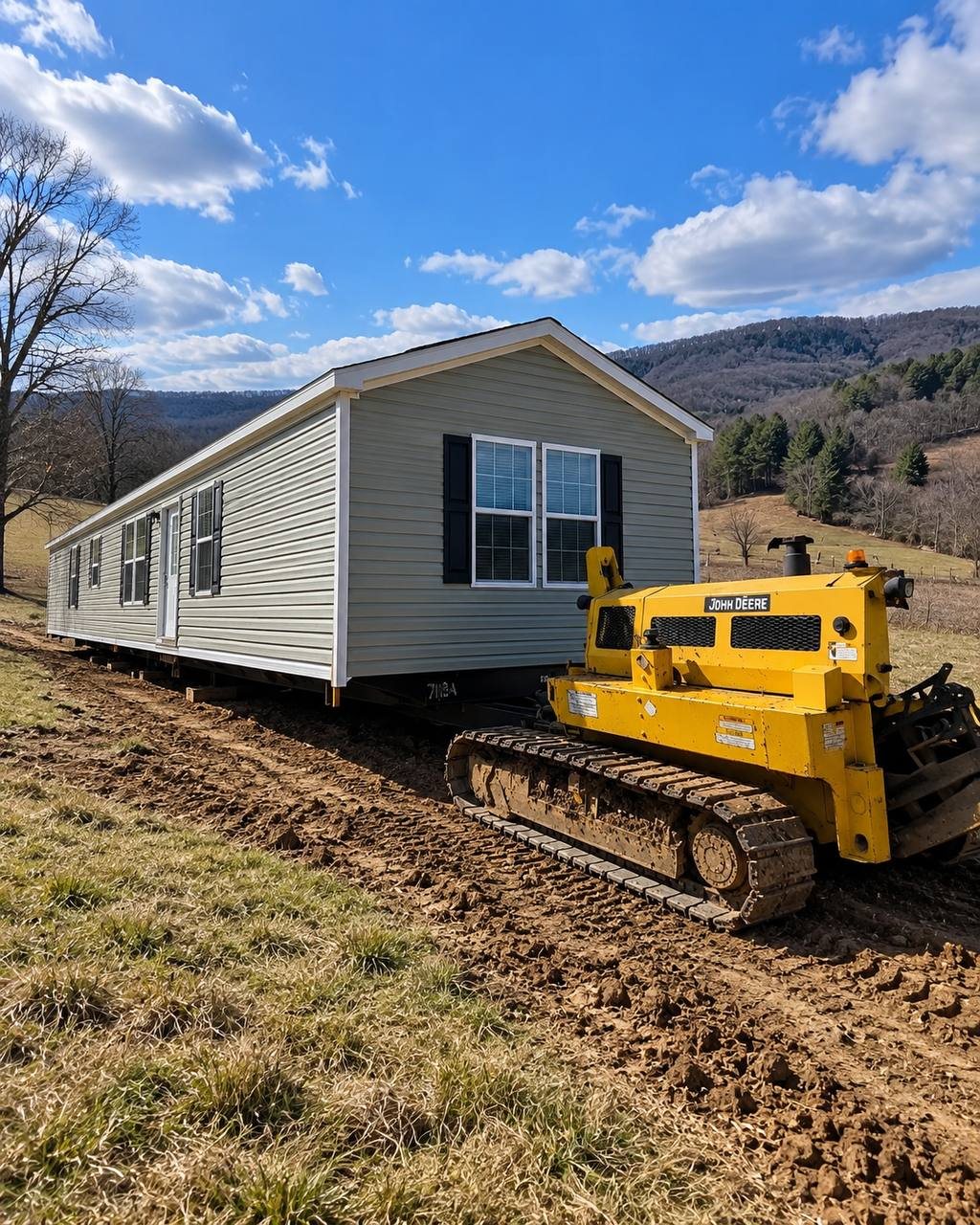
Once the home reaches its new lot, the federal installation standard takes over. Buncombe County falls in HUD Wind Zone I under the HUD Manufactured Home Construction and Safety Standards (24 CFR 3280.305). Wind Zone I is the baseline federal design standard; anchoring systems and tie-down straps must meet that specification at minimum, following the manufacturer's installation manual for the specific home. The county conducts a setup inspection before the home can be legally occupied, and financing and insurance typically require that certificate before they move forward.
What inspectors check: pier spacing and soil bearing surface, anchor count and strap placement per the installation manual, utility connections, and whether the lot grades away from the home on all sides. Lots carved into hillsides above the valley floor — common on the ridge roads east of Swannanoa proper — tend to draw more scrutiny on drainage than level sites do. Address grading and drainage questions before the move date, not after the inspector flags them on-site.
Storm history and what it means for scheduling
Buncombe County has 19 federally declared disaster events on record spanning 1973-2026. The recent list includes a Winter Storm in 2026, a Tropical Storm in 2024, and Hurricanes in 2023, 2021, and 2020. For mobile home moves, that record matters in two practical ways: road and bridge conditions after a major storm event can delay a permitted wide-load route for days, and a home that has been disconnected from its origin lot sits at its most vulnerable if weather moves through before setup is complete at the destination.
The Swannanoa River runs along the valley floor, and low-lying lots near its banks have seen repeated flood events across those declared disasters. Any lot inspection before committing to a destination site should include a direct question about flood history. FEMA's online flood map portal is a free starting point, and a call to Buncombe County planning costs nothing. Scheduling in late spring or early fall tends to reduce weather risk without competing with summer's tighter booking calendar.
Older homes: asbestos, lead paint, and what to confirm before the move
Mobile homes built before June 1976 — when the HUD Manufactured Home Construction and Safety Standards first took effect — may contain asbestos-containing materials in vinyl flooring, roof coatings, pipe insulation, or duct tape at joint seams. Homes built before 1978 may have lead-based paint on interior surfaces. Neither condition prevents a move, but the EPA requires that any disturbance of these materials follow specific handling and disposal protocols. A move disturbs more than it looks like it will: duct tape at joints pulls loose, floor seams flex open, and roofing panels torque in transit.
The practical step for any pre-1978 home is an inspection by a state-certified assessor before the move date. The cost is modest against the cost of a remediation order issued after the fact. A contractor who does not ask about the home's construction date before disconnecting it is skipping a step the state takes seriously.