One in six Haywood County homes sits on a pier block
Census estimates count roughly 5,900 mobile homes in Haywood County, about 17% of all housing units and one of the higher concentrations in western North Carolina. Maggie Valley mirrors that figure: approximately 327 mobile homes make up just over 17% of the town's housing stock. That density means moves happen constantly: a park tenant buying land in the county, a family relocating within Haywood, an estate transferring a home to a buyer across town, or a newer doublewide being repositioned onto a permanent foundation.
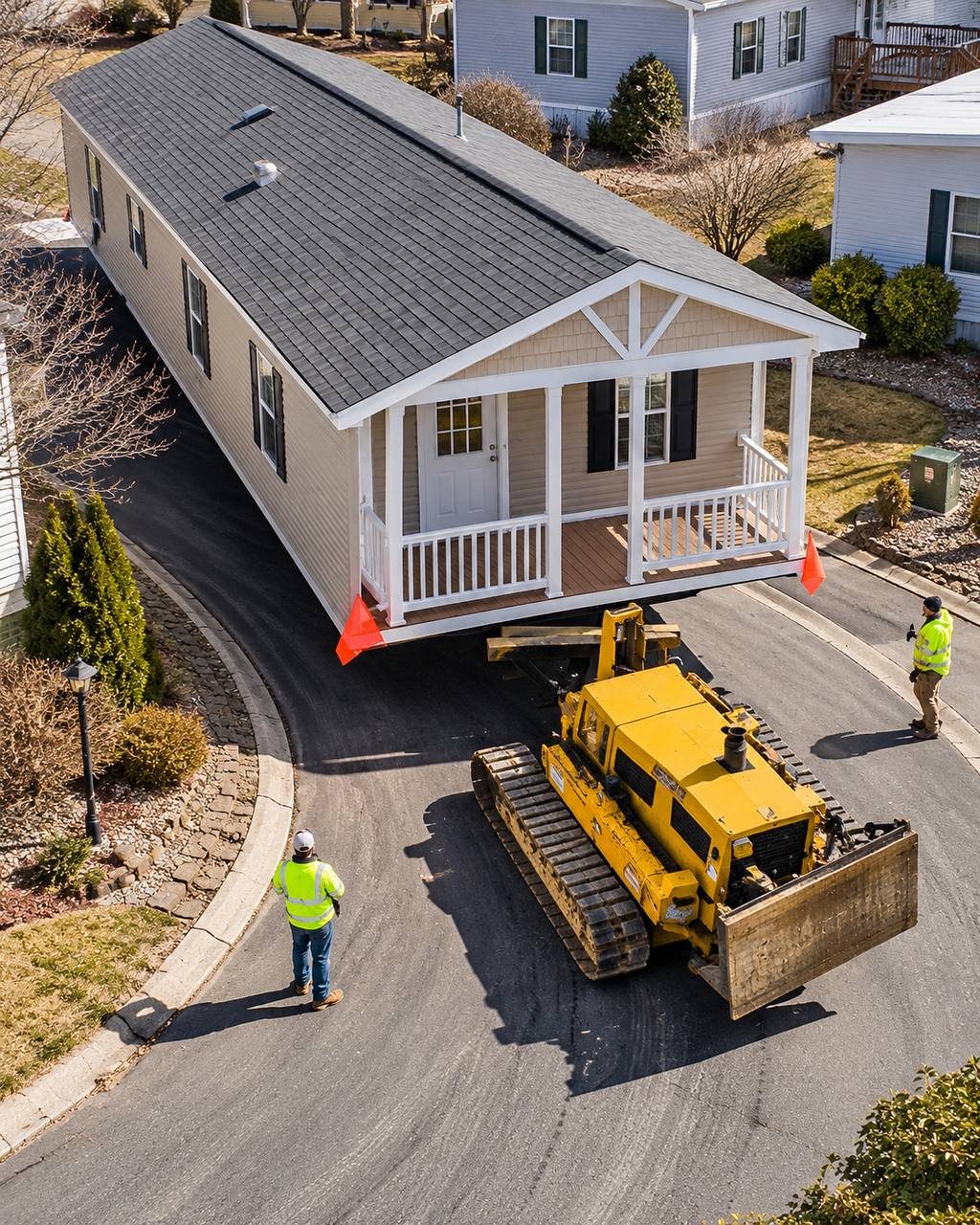
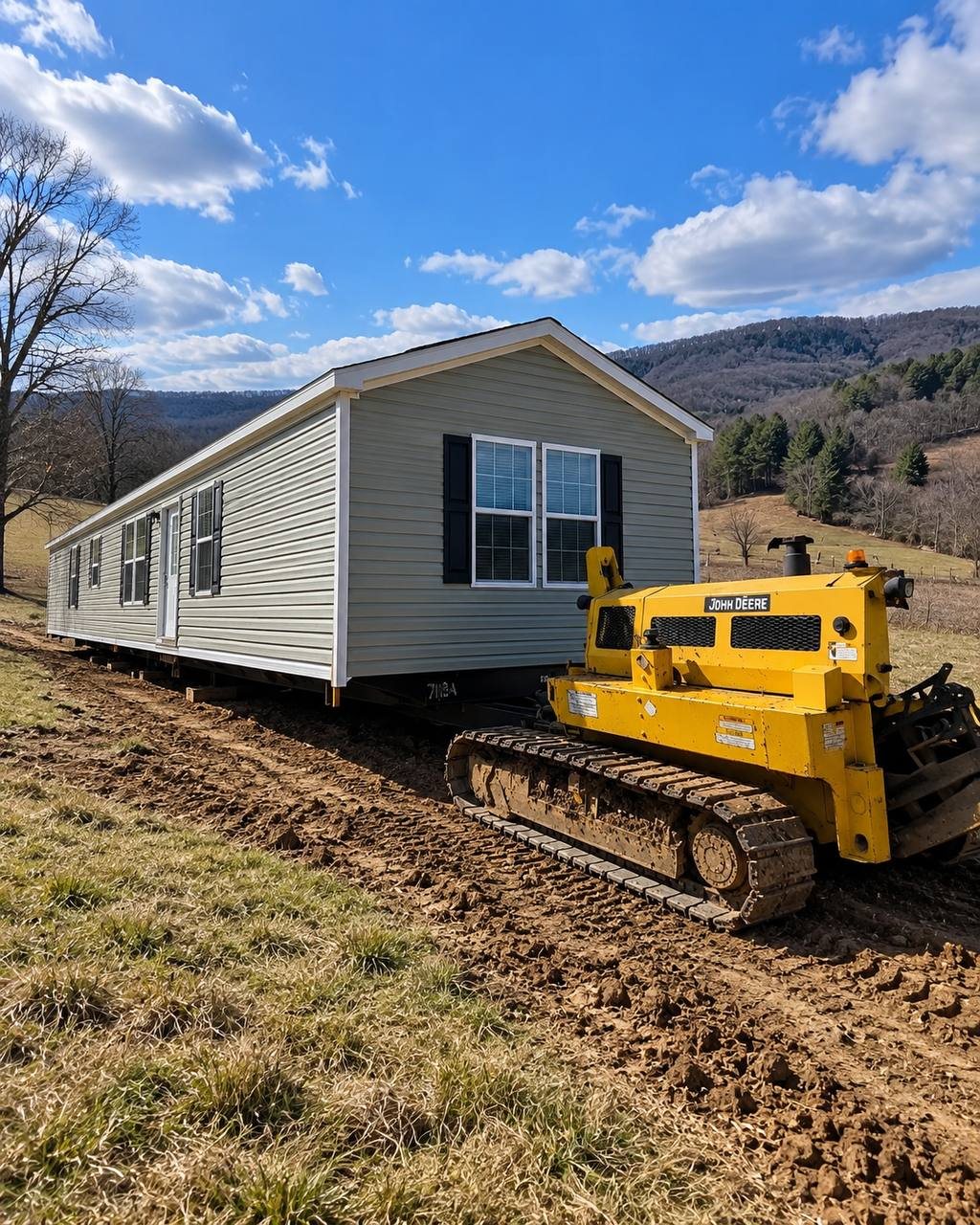
The homes themselves vary widely. Older single-wides from the 1970s and 1980s are common in Haywood's established parks; newer doublewides sit on full piers in the hollows between the ridges. Each type moves differently. A single-wide rolls in one piece; a doublewide is split at the marriage wall for transport and rejoined at the destination, which adds setup time and a separate inspection point.
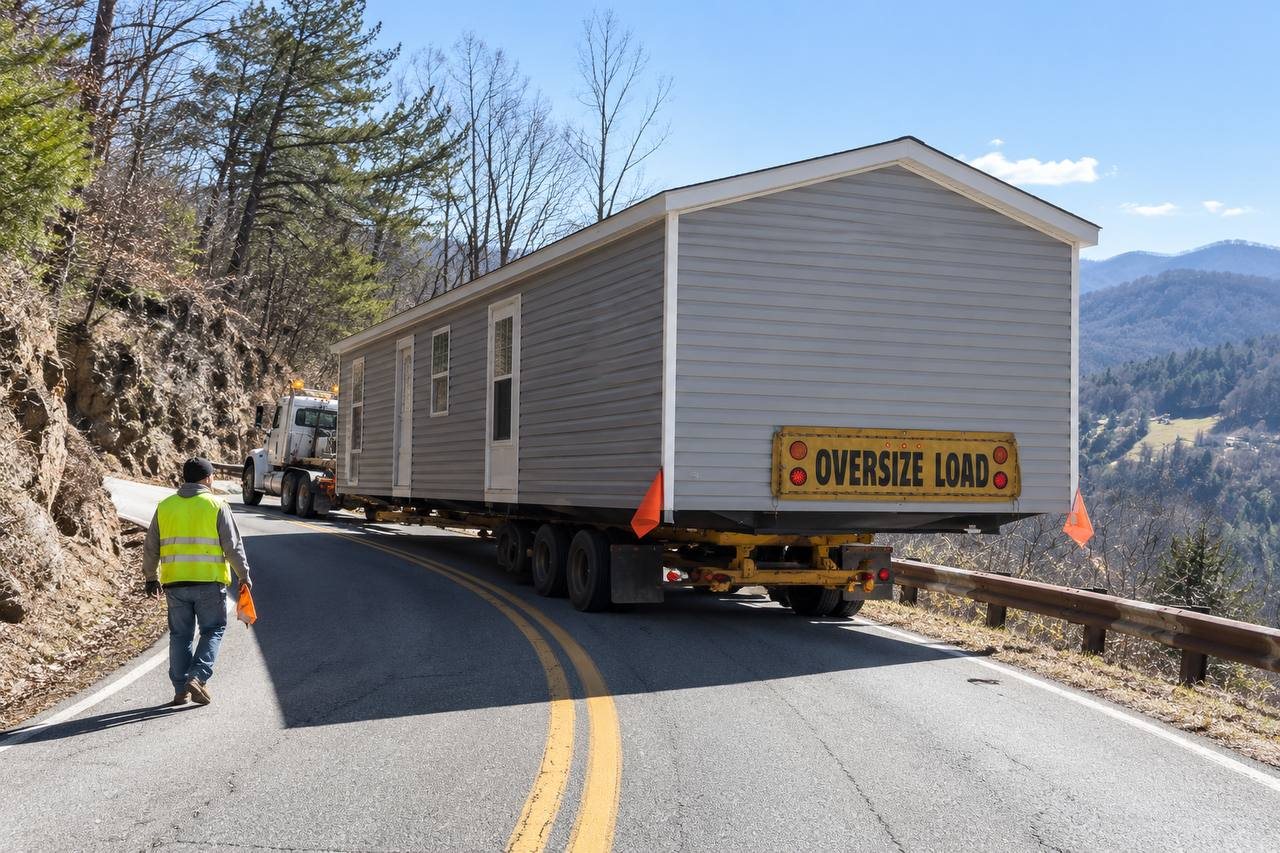
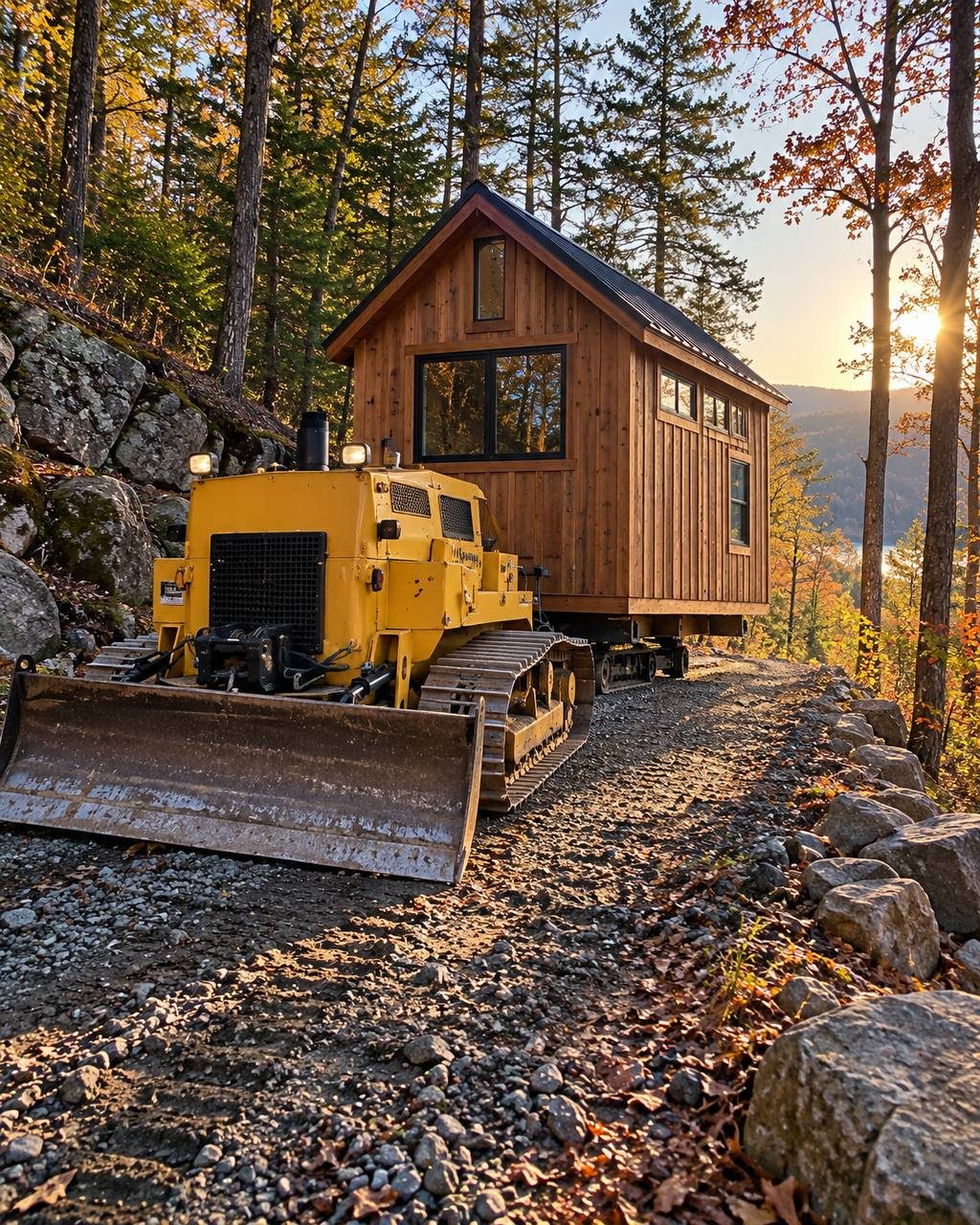
The geography shapes every job as much as the home itself. Maggie Valley sits at the mouth of a gorge cut by Soco Creek, with US-19 threading the valley floor and residential lots climbing sharply in every direction. A home that moves cleanly on the highway becomes a logistics puzzle once the hauler turns off toward Jonathan Creek or up a hollow road near Cataloochee. Knowing this county's roads before the move date is half the work. The full picture of what state law requires from start to finish is on the North Carolina mobile home moving laws page.
What a move costs in mountain Haywood
A single-wide move within Haywood County typically runs $3,000 to $8,000; a double-wide runs $7,000 to $15,000. Those ranges cover transport, NCDOT permit fees, and a standard blocking and tie-down reset at the destination. What pushes a job toward the high end: steep or narrow lot access, a new foundation pad, utility line raises at low crossings, or a haul that crosses county lines.
| Move scope | Typical range |
|---|---|
| Single-wide, local county move, open road route | $3,000 – $5,500 |
| Single-wide, tight mountain access or county-line haul | $5,500 – $8,000 |
| Double-wide, standard Haywood County move | $7,000 – $10,500 |
| Double-wide, new blocking and full tie-down reset | $10,500 – $15,000 |
| Single-wide with full foundation prep and anchoring | $5,000 – $8,000 |
| Double-wide requiring utility line coordination | $9,000 – $15,000 |
Ask for itemized quotes with transport, permits, and setup priced as separate line items. A quote that bundles everything makes scope changes impossible to price accurately. If your destination lot has no existing pad or utilities, ask what site prep costs before the move truck is scheduled — lot-prep surprises are the most common source of budget overruns on mountain moves. The mobile home transport overview covers what each line item typically includes.
Two permits no Haywood County move can skip
Two permits are required before a manufactured home can legally travel on North Carolina roads. The first is an oversize transport permit from NCDOT. The application process, approved routes, and any travel-time restrictions for mountain corridors like US-19 through Haywood County are documented in NCDOT Publication MH-2. That document defines which roads the hauler can legally use and what time-of-day limits apply on mountain routes.
The second is a county tax-clearance certificate. Under NCGS Chapter 105, Article 18, Haywood County requires proof that property taxes on the home are current before a moving permit issues. A home with unpaid taxes cannot legally move. Discovering that on moving day costs everyone time and can delay the job by days or weeks while the tax situation is resolved; pull the tax status before you schedule a crew.
After arrival, the county requires a setup inspection before the home can be occupied. The inspector checks blocking, tie-downs, utility connections, and the overall installation. Scheduling the inspection early — not as an afterthought — is the fastest path to a firm move-in date.
Storm record and why anchoring matters here
Haywood County has recorded 19 federal disaster declarations over 1973-2026, and the recent run is weighted heavily toward wind and water events: Hurricane (2020), Hurricane (2021), Hurricane (2023), Tropical Storm (2024), and Winter Storm (2026). Each of those events put manufactured homes under stress that conventional construction doesn't face the same way, and the pattern has made county inspectors thorough about anchoring at every new installation.
The federal classification for Haywood County is HUD Wind Zone I under 24 CFR 3280.305. Every time a manufactured home is moved and reinstalled, the entire anchoring system must be reset to Zone I specifications before the setup inspection will pass. A home that was properly anchored at its previous location may have hardware that needs to be repositioned or replaced at the new site; each new installation is treated as fresh under the code. Skipping proper tie-downs is both a code violation and a practical insurance liability. Carriers writing policies on manufactured homes in Haywood County know the storm history, and a home installed without documented anchoring compliance faces coverage gaps. The HUD Office of Manufactured Housing Programs publishes the full installation standards; the county inspector enforces them at every setup.
Hiring a licensed crew in western NC
North Carolina requires both transport contractors and setup installers to hold active licenses from the NC Manufactured Housing Board (NCDOI). Those are sometimes the same company and sometimes two separate crews — both roles require licensure. Ask to see each contractor's license and verify active status on the NCDOI lookup before signing a contract. An unlicensed installer means the setup inspection will fail, and there is no shortcut around that.
What separates a capable Haywood County mover from a generic hauler is local knowledge: route experience on mountain terrain, familiarity with the county inspection checklist, and an established relationship with utility providers when line raises are needed. Maggie Valley's side streets off US-19 and the hollow roads that serve small clusters of homes require the kind of judgment a first-time Haywood mover won't have. In busy seasons, mountain movers book weeks out; starting permits and site prep early while you are still comparing quotes is the fastest path to a firm move date.
Ask three questions upfront: Have they moved homes on roads similar to yours? Do they pull the NCDOT permit or does that responsibility fall to the homeowner? Who contacts the utility company if a line needs to be raised? A crew with clear, prompt answers to all three has done this before in this county. For service coverage across the region, mobile home movers near me lists the full western NC footprint.